 Pin It
 My daughter came home from school one afternoon asking why her lunch box always smelled like sad sandwiches while her friend's contained these beautiful little cups of hummus and vegetables. The next week, I decided to surprise her—not just with snacks, but with something that felt special enough to show off at the lunch table. Those first field trip snack cups became our thing, and now whenever she sees me pull out the small jars, she knows something fun is about to happen.
I remember standing in the kitchen with my hands covered in carrot shavings, realizing I'd been cutting vegetables too thick. My partner tasted one and made a face—not a mean one, just the face that says I could do better. That's when it clicked: the thinner the sticks, the easier they dip, the more satisfying they feel to crunch. Now every vegetable gets the same respectful attention, and somehow that small detail has made all the difference in how often these cups actually get eaten.
Ingredients
- Hummus: Use your favorite store-bought version or make it from scratch—the creamy base is what makes these cups feel indulgent while keeping them light.
- Carrots: Peeling them fresh and cutting into thin sticks keeps them sweet and crisp; store them in ice water before assembly if you have the time.
- Cucumber: Choose firm ones and cut lengthwise into sticks so they hold their shape and don't get watery sitting in the cup.
- Red and yellow bell peppers: The color combination isn't just pretty—each color has a slightly different flavor, and kids notice when you include both.
- Snap peas: These are forgiving and stay crunchy, plus they're naturally sweet enough that even skeptical eaters reach for them.
- Cherry tomatoes: Leave them whole or halve them depending on what fits best in your cups; their little bursts of flavor make everything taste fresher.
- Optional celery and jicama: Celery adds that nostalgic crunch, while jicama brings a surprise sweetness that makes people ask what it is.
Tired of Takeout? 🥡
Get 10 meals you can make faster than delivery arrives. Seriously.
One email. No spam. Unsubscribe anytime.
Instructions
- Wash and prep your vegetables:
- Run everything under cool water and pat dry with a clean towel—this keeps them fresher longer and removes any grit. Take your time cutting; thin, uniform sticks look intentional and dip so much easier than chunky pieces.
- Portion the hummus:
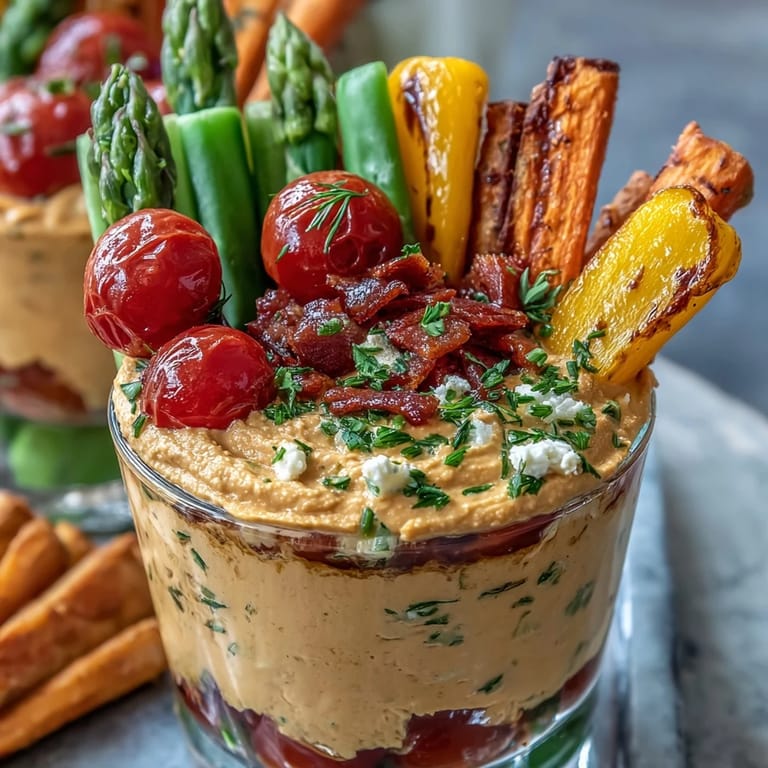
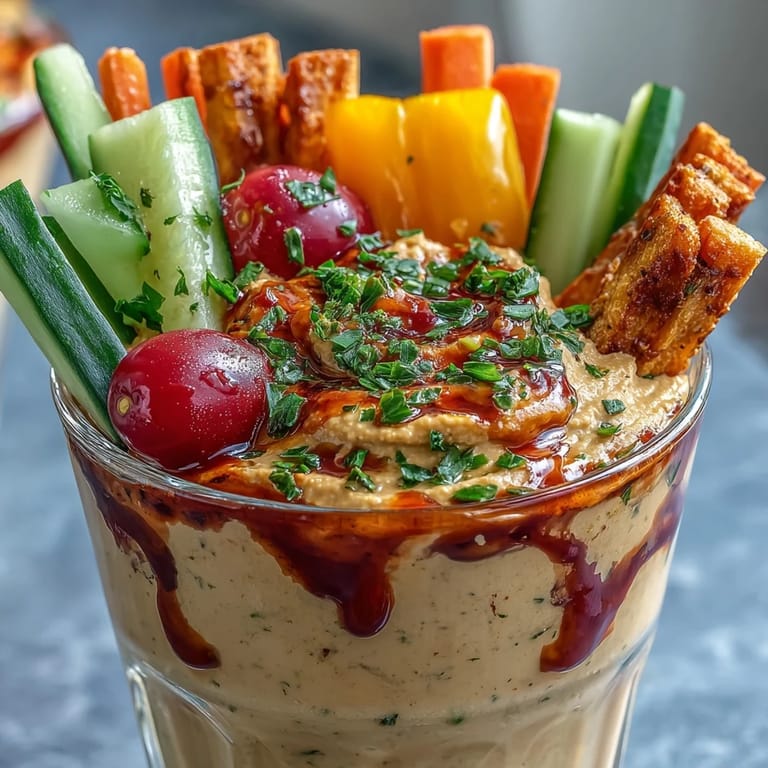
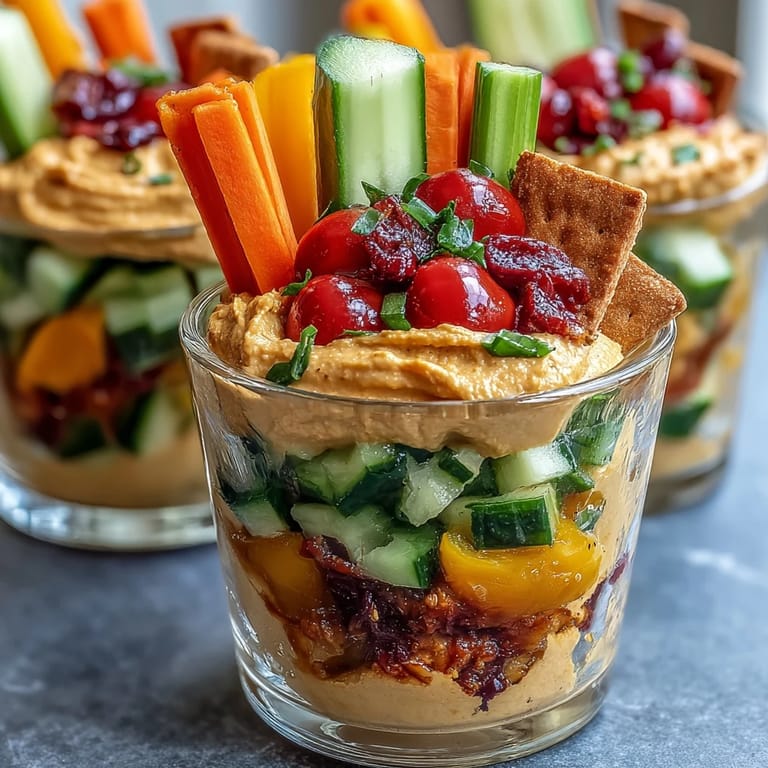
- Scoop about 1/4 cup into the bottom of each small cup or jar, smoothing it slightly so it creates a little base. This is where you can add personality—a sprinkle of paprika or a tiny drizzle of olive oil turns simple into special.
- Arrange your vegetable sticks upright:
- Stand them straight up in the hummus like you're creating little gardens; this makes them easy to grab and turns snacking into a little ritual. Mix colors and textures so every cup looks inviting.
- Cover and chill:
- Snap the lids on tight and refrigerate until you need them—they stay perfect for two days, which gives you a small window to grab them before anyone else does. They travel beautifully in backpacks and coolers without leaking.
 Pin It
 There's something quietly powerful about handing your kid a snack that they actually want to eat, that fits in their backpack, that doesn't leave their hands sticky or their clothes stained. These little cups have become the thing we prep together on Sunday afternoons, talking about the week ahead while vegetables pile up around us. They're practical, yes, but they're also proof that paying attention to small details—how things look, how they travel, how they feel to eat—turns nutrition into something almost joyful.
Flavor Swaps and Seasonings
The hummus is your canvas, and there are so many directions you can take it without changing a single ingredient. Sprinkle the top with sumac or zaatar before adding vegetables for a tangy, herby note that makes people perk up. A tiny drizzle of really good olive oil and a crack of fresh black pepper transforms it into something almost fancy, which somehow makes the carrots taste better too.
Seasonal Vegetable Rotations
Summer invites cherry tomatoes, cucumbers, and tender snap peas to take center stage, but don't stop there when colder months arrive. Blanch thin green beans or broccoli florets quickly to keep them tender but still crisp, and radishes add a peppery surprise that works year-round.
Storage and Travel Tips
These cups are designed for real life—they pack into lunch boxes without tipping, fit in car cup holders, and don't require refrigeration for short trips if your hummus stays cool. Prep them the night before so mornings feel calmer, and keep backup vegetables washed and cut in the fridge for last-minute assembly.
- Assemble cups no more than two days ahead to keep vegetables at their crispiest and hummus at its freshest.
- If vegetables start softening, a quick ice bath resurrects their crunch, but prevention with sealed lids is always easier.
- Swap vegetables freely based on what you have; these cups are flexible enough to work with almost any vegetable your kitchen holds.
 Pin It
 These snack cups have quietly become the thing that makes eating vegetables feel like a choice rather than an obligation. Pack them with confidence and watch them disappear.
Recipe Q&A
- → How do I keep the vegetables fresh in the snack cups?
Store the cups refrigerated and cover them with lids to maintain freshness. Consume within two days for best flavor and texture.
- → Can I substitute vegetables in this snack?
Absolutely! Try blanched green beans, radishes, or broccoli florets for variety and seasonal availability.
- → What adds more protein to these snack cups?
Include baked tofu sticks or cheese cubes to increase protein content, keeping dietary preferences in mind.
- → Is it necessary to use store-bought hummus?
No, making homemade hummus allows customization of flavors and ingredients to suit personal taste and dietary needs.
- → Any tips for enhancing flavor before serving?
Sprinkle hummus with paprika, zaatar, or a drizzle of olive oil to add layers of flavor before arranging vegetables.