 Pin It
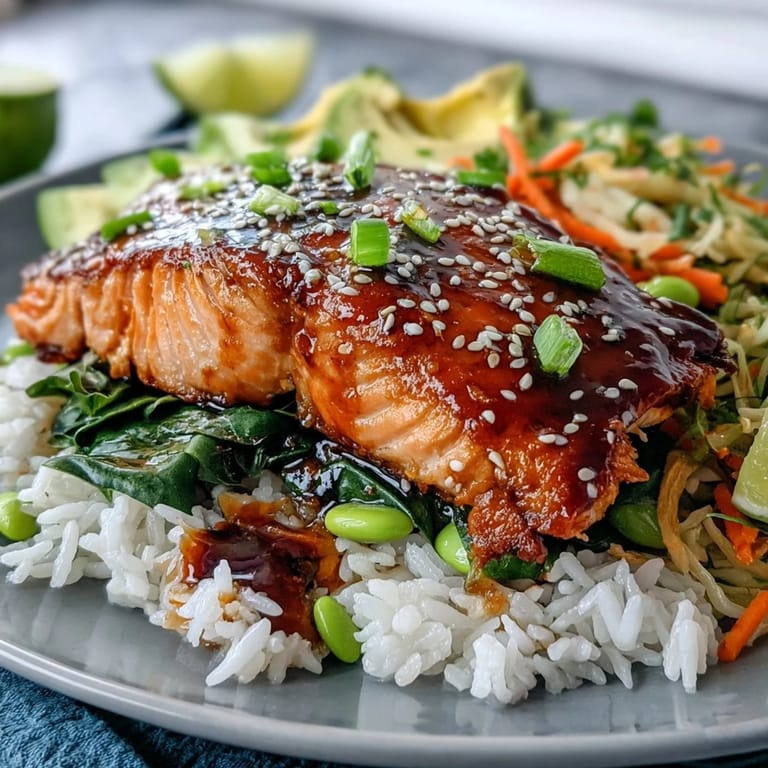
 There's this moment when you're standing at the fish counter and the salmon looks so impossibly fresh that you instantly know it deserves something special, not just salt and heat. I had that feeling one rainy Tuesday afternoon, and instead of reaching for the usual lemon-butter routine, I found myself thinking about ginger and soy and honey all working together. That bowl came together almost by accident, born from what I had on hand and a sudden craving for something that tasted bright and complete in a single dish.
I made this for my sister who had just moved back home, and watching her take that first bite while the glaze caught the kitchen light felt like a small victory. She asked for the recipe immediately, and that's when I knew I'd stumbled onto something worth keeping around.
Ingredients
- Salmon fillets (4, about 150 g each): Look for fillets with flesh that springs back slightly when you press it, a sign they haven't been sitting too long.
- Soy sauce (4 tbsp, low sodium): Low sodium lets the other flavors sing instead of overpowering everything with salt.
- Honey or maple syrup (2 tbsp): This balances the umami from soy and adds a subtle sweetness that caramelizes beautifully on the fish.
- Fresh ginger, grated (2 tbsp): Grate it just before using so you capture all that peppery, warm bite that fades quickly once exposed to air.
- Garlic cloves, minced (2): Fresh garlic mingles with the ginger to create an aromatic base that makes the whole bowl smell incredible.
- Rice vinegar (1 tbsp): This adds a gentle acidity that prevents the glaze from feeling one-dimensional.
- Sesame oil (1 tbsp plus 1 tbsp for vegetables): Its nutty, toasted flavor is the secret ingredient that makes people ask what you did differently.
- Sriracha or chili paste (1 tsp, optional): Add this only if you want heat that builds gently rather than shocks.
- Sesame seeds (1 tbsp plus extra): Toast them lightly in a dry pan first if you have time, it wakes them up completely.
- Jasmine or sushi rice (2 cups uncooked): Jasmine rice absorbs the marinade better than long grain and stays tender without becoming mushy.
- Water (2 1/2 cups) and salt (pinch): The salt in the cooking water seasons the rice evenly so you don't need to adjust it later.
- Edamame (1 cup shelled): Frozen edamame works just as well as fresh and saves you the hulling step entirely.
- Shredded carrots (1 cup): Pre-shredded works here, though freshly shredded has a better texture and crunch.
- Red bell pepper, thinly sliced (1): The sweetness of red peppers complements the salty-spicy glaze better than green.
- Baby bok choy or snap peas, sliced (1 cup): Bok choy stays crisp and has a subtle bitterness that balances the rich salmon perfectly.
- Green onions, sliced thin (2): Add half of these after cooking and reserve the rest for garnish so you get both cooked and fresh onion flavor.
- Avocado (1, sliced): Add this just before serving so it doesn't brown or become mushy from the warm rice underneath.
- Fresh cilantro or microgreens (optional): These add an herbaceous brightness that ties all the Asian flavors together without competing.
- Lime wedges: A squeeze of lime at the very end brightens everything and cuts through the richness of the salmon and avocado.
Tired of Takeout? 🥡
Get 10 meals you can make faster than delivery arrives. Seriously.
One email. No spam. Unsubscribe anytime.
Instructions
- Make the glaze:
- Whisk together soy sauce, honey, ginger, garlic, rice vinegar, sesame oil, and sriracha in a bowl until the honey dissolves completely. Set aside 2 tablespoons in a small dish for drizzling later, so the rest stays clean for the raw fish.
- Marinate the salmon:
- Place salmon fillets in a shallow dish and pour the remaining marinade over them, turning to coat all sides. Let them sit in the refrigerator for 15 to 30 minutes while you prepare everything else, giving the flavors time to penetrate without drying the fish out.
- Cook the rice:
- Rinse the rice under cold water until the water runs clear, then combine it with 2 and a half cups of water and a pinch of salt in a saucepan. Bring to a boil, then reduce heat to low, cover, and simmer for exactly 15 minutes until the water is completely absorbed and the rice is tender.
- Stir-fry the vegetables:
- While the rice cooks, heat 1 tablespoon of sesame oil in a large nonstick skillet over medium-high heat until it shimmers. Add the edamame, carrots, bell pepper, and bok choy, stirring constantly for 3 to 4 minutes until the vegetables are crisp-tender and beginning to caramelize slightly at the edges.
- Sear the salmon:
- Remove the salmon from the marinade and discard the used marinade, then place the fillets in the same skillet with a splash of fresh oil if needed. Sear them over medium-high heat for 3 to 4 minutes per side until the exterior is caramelized and the flesh flakes easily when tested with a fork, then sprinkle generously with sesame seeds.
- Assemble the bowls:
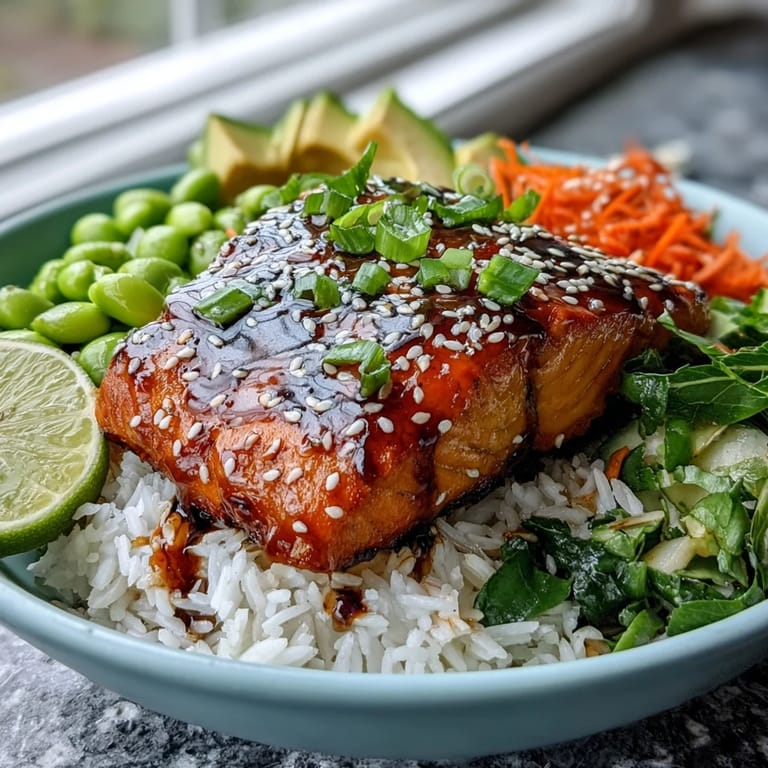
- Divide the fluffy rice among four bowls, then top each with a portion of stir-fried vegetables, one salmon fillet, slices of fresh avocado, sliced green onions, and any additional garnishes you like. Drizzle each bowl with the reserved marinade and serve with lime wedges on the side.
 Pin It
 There's something deeply satisfying about building a bowl where each component has its own identity but somehow belongs to the same meal. The first time I got all four elements timed perfectly, each hot where it should be and each cold where it should be, I felt like I'd cracked some kind of code.
Timing Is Everything
The hardest part isn't the cooking, it's the coordination of having hot rice, warm vegetables, and just-cooked salmon all ready at the same moment. Start your rice first since it takes the longest, begin the vegetables when the rice has about 8 minutes left, and don't start the salmon until your vegetables are nearly done. This way, everything finishes within a minute of each other and you're not standing there with cold rice while waiting for salmon.
Customizing Your Bowl
I've made this bowl for people with different dietary needs and it adapts beautifully without losing its character. Swap the white rice for brown rice or cauliflower rice if you want more fiber or fewer carbs, use tamari instead of soy sauce for gluten-free, or skip the honey entirely if you're watching sugar and let the natural umami carry the glaze. The core flavors stay intact no matter what you swap, which is the mark of a recipe worth knowing.
Flavor Layers and Finishing Touches
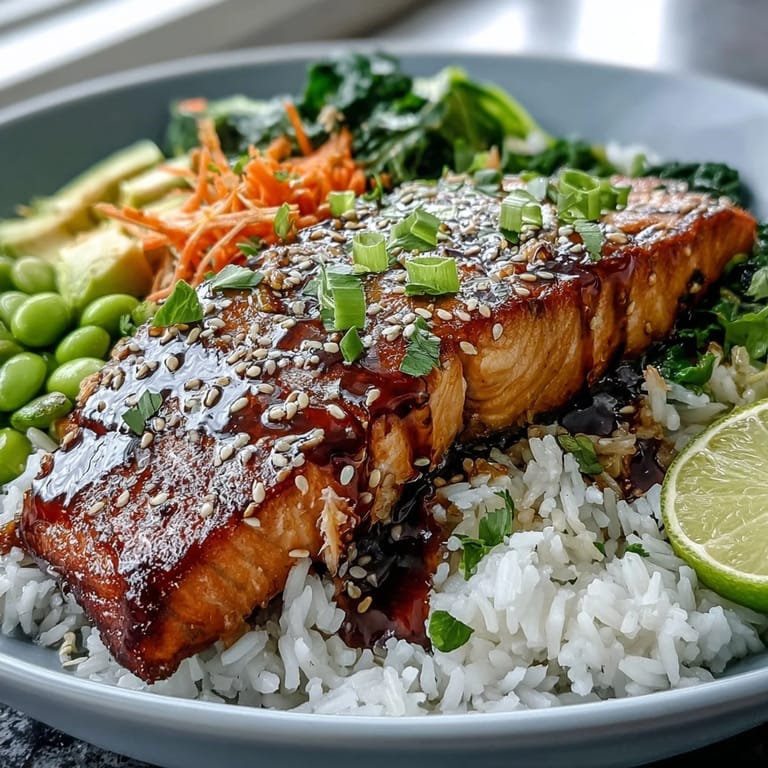
The real magic happens in those last details that most people skip over but make all the difference between a good meal and one you remember. A squeeze of fresh lime over everything wakes up flavors that might feel heavy otherwise, while sliced radishes or pickled ginger add a sharp, unexpected brightness that keeps your palate interested through every bite. The reserved marinade drizzled at the very end is your insurance policy against everything tasting the same temperature, creating little pockets of concentrated flavor throughout the bowl.
- Toast your sesame seeds dry in a pan for 30 seconds before sprinkling them on the finished bowl to deepen their nutty flavor.
- Add the avocado and fresh herbs only right before eating so they stay fresh and don't get warm from the hot rice underneath.
- A crispy element like crushed peanuts or toasted nori strips scattered on top adds textural contrast that makes the whole bowl more interesting.
 Pin It
 This bowl became my go-to when I wanted to feed people something that looked impressive but felt effortless, and somehow that's the best kind of recipe to have in your rotation. Every time I make it, I remember why I started, which is honestly the highest compliment a dish can get.
Recipe Q&A
- → How long should I marinate the salmon?
Marinate the salmon fillets for 15 to 30 minutes in the refrigerator. This timeframe allows the flavors to penetrate the fish without breaking down the texture too much.
- → Can I make this bowl gluten-free?
Yes, simply substitute tamari for the soy sauce. All other ingredients, including the salmon, rice, vegetables, and fresh garnishes, are naturally gluten-free.
- → What rice works best for this bowl?
Jasmine or sushi rice are ideal choices for their fluffy texture and mild sweetness that complements the bold marinade. Brown rice or cauliflower rice work well for lighter options.
- → How do I know when the salmon is cooked through?
The salmon is done when it flakes easily with a fork and reaches an internal temperature of 145°F. The glaze should be caramelized and slightly sticky.
- → Can I prepare the vegetables ahead of time?
Yes, slice the carrots, bell pepper, and bok choy up to a day in advance and store them in airtight containers in the refrigerator. Stir-fry them just before assembling the bowls for the best texture.
- → What wine pairs well with this bowl?
A crisp Chardonnay or dry Riesling complements the savory-sweet glaze and balances the richness of the salmon and avocado.