 Pin It
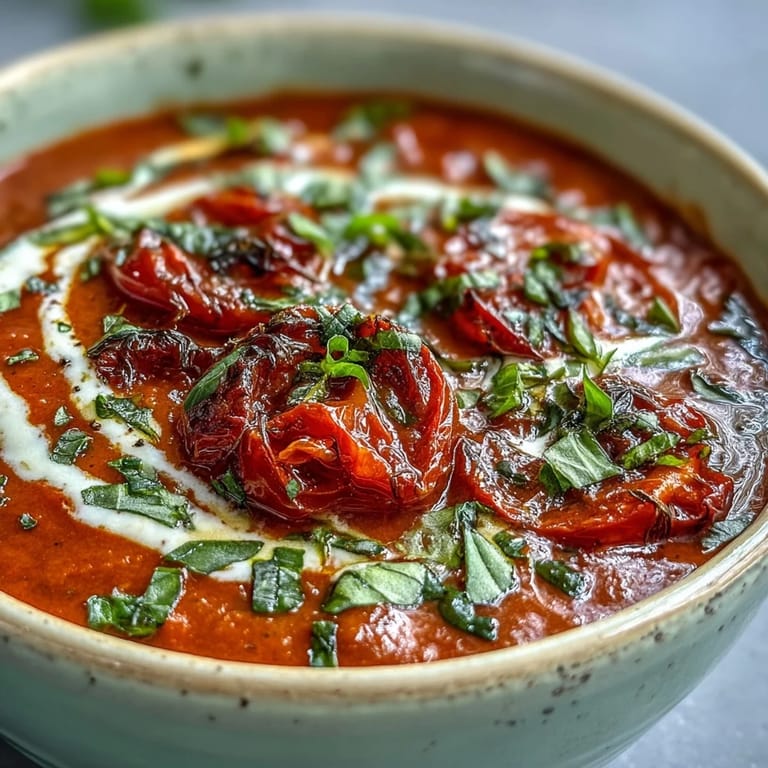
 There's a particular afternoon in late August when my kitchen smells nothing like itself, and it's because I've finally learned to roast tomatoes instead of boiling them into submission. A friend had mentioned this trick almost offhandedly while we were shopping at the farmers market, pointing at the pile of overripe heirlooms and saying the oven changes everything. That first batch emerged golden and concentrated, the skins blistered and practically sliding off, and when I poured them into soup I couldn't believe the depth of flavor that had been waiting the whole time. Now it's become the soup I make when I want to feel like I'm cooking something special without fussing endlessly.
I made this soup for my partner during the first cold snap of the season, and we ate it straight from the pot while standing in the kitchen because we couldn't wait to sit down. The steam rose up between us, and somehow talking about nothing important while eating something this good felt like the whole point of cooking at all. He asked for seconds before finishing the first bowl, and I remember thinking that's when you know a recipe is working.
Ingredients
- Ripe tomatoes, halved (1.5 kg or 3.3 lbs): The quality of your tomatoes matters more here than anywhere else since roasting concentrates their flavor, so pick ones that smell fragrant and feel heavy for their size.
- Large yellow onion, quartered (1): Yellow onions turn almost sweet when roasted, which balances the acidity of the tomatoes perfectly.
- Garlic cloves, peeled (6): The cloves mellow considerably in the oven and become almost creamy, so don't skip them.
- Extra-virgin olive oil (2 tbsp): This is your cooking fat, and it matters for flavor so use something you actually enjoy tasting.
- Kosher salt (1 tsp) and freshly ground black pepper (1/2 tsp): These are your baseline seasonings, though you'll taste and adjust at the end.
- Vegetable broth, low sodium (2 cups or 480 ml): Low sodium is important here because you're in control of the final salt level and the tomatoes already bring plenty of flavor.
- Fresh basil leaves, packed (1/2 cup or 15 g): Add these at the last moment before blending so they stay bright and aromatic rather than turning dark and bitter.
- Unsalted butter (1 tbsp, optional): This adds a silky finish if you want richness, but the soup is complete without it.
- Sugar (1 tsp, optional): Sometimes tomatoes need just a whisper of sweetness to balance their acidity, especially if they're on the tangy side.
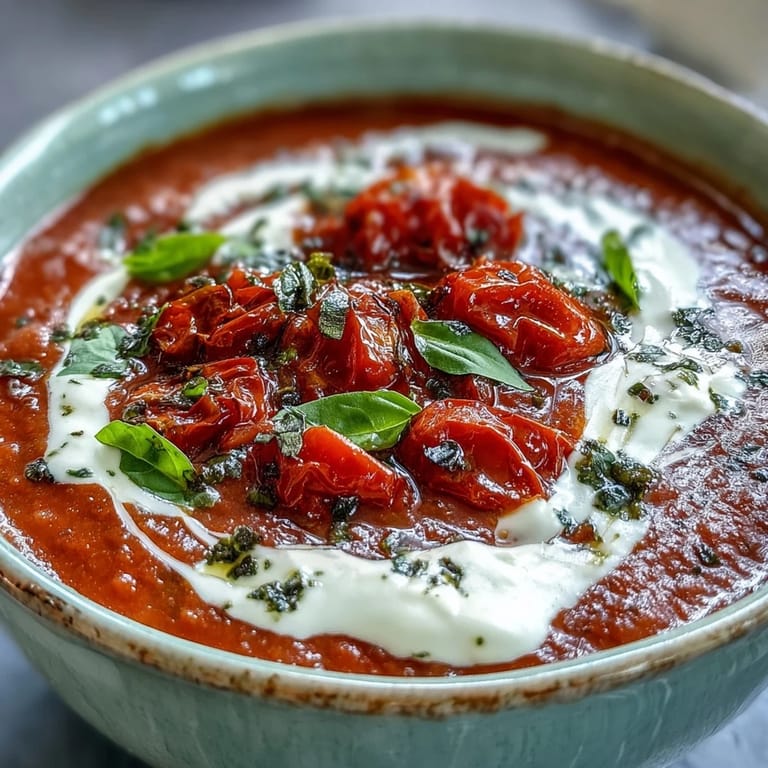
- Heavy cream or crème fraîche (1/4 cup or 60 ml, optional): A drizzle at the end creates that restaurant effect, though fresh basil alone looks beautiful too.
- Fresh basil leaves and croutons for garnish: These are your final touches that make the soup feel finished and intentional.
Tired of Takeout? 🥡
Get 10 meals you can make faster than delivery arrives. Seriously.
One email. No spam. Unsubscribe anytime.
Instructions
- Heat your oven and prepare the pan:
- Set the temperature to 220°C (425°F) and line a baking sheet with parchment paper so cleanup later won't feel like a chore.
- Arrange and season your vegetables:
- Spread the tomato halves, onion quarters, and garlic cloves across the sheet, drizzle everything with olive oil, then scatter salt and pepper over top. Toss everything together so each piece gets a light coating of oil, which is what creates that beautiful caramelization.
- Roast until the edges turn golden:
- Slide the sheet into the oven and watch for about 35–40 minutes, until the tomato edges are darkened and caramelized and the onions have softened into themselves. Your kitchen will smell like summer concentrated into steam.
- Transfer to your pot with all the juices:
- Scrape everything from the baking sheet into a large pot, making sure to get all those browned bits and any accumulated liquid, because that's where the flavor lives. Add your vegetable broth and place the pot over medium heat, bringing it to a gentle simmer.
- Add basil, butter, and sugar if using:
- Stir in the fresh basil leaves along with the butter and sugar if you've decided to use them, and let everything simmer together for about 5 minutes so the basil flavor blooms into the broth. This is not the time to rush; five minutes of gentle simmering makes a real difference.
- Blend until the soup becomes silky:
- Using an immersion blender, puree everything until you reach your preferred smoothness, or work in batches with a countertop blender if that's what you have. If you want an almost velvet texture, strain the blended soup through a fine sieve, though this step is entirely optional.
- Taste and adjust your seasoning:
- This is your moment to add more salt, a pinch of pepper, or even a touch more sugar if the tomato acidity feels sharp. Trust your palate here because every batch of tomatoes is slightly different.
- Serve while the soup is hot:
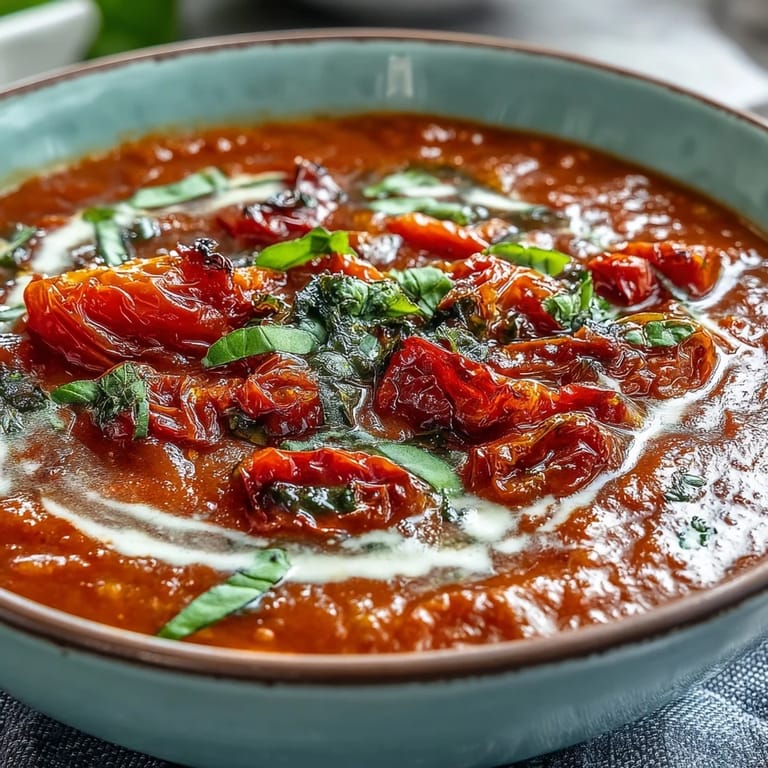
- Ladle into bowls and top with a drizzle of cream if you're using it, a handful of fresh basil leaves, and croutons or toasted bread if you like texture. The presentation makes the eating feel like an occasion.
 Pin It
 There's a moment right after you blend this soup when it transforms from a pot of vegetables into something that feels almost luxurious, and that's when you know the recipe is working. I've learned to pause and appreciate that moment before I start worrying about garnishes.
Variations That Keep It Interesting
This soup is a canvas, and I've experimented with versions that surprise me each time. A splash of balsamic vinegar right before serving adds a subtle depth that makes people ask what that flavor is, while a pinch of red pepper flakes creates a gentle warmth that lingers at the back of your throat. For a smokier character, I've roasted the tomatoes and onions over a grill pan instead of in the oven, which creates a different kind of caramelization that feels more rustic. You could also stir in a teaspoon of tomato paste before blending if your tomatoes taste bright but thin, which deepens the umami without making it taste tomatoey in an obvious way.
Making It Your Own
The beauty of this recipe is that it invites you to listen to what your ingredients are asking for. If you're cooking vegan, plant-based butter and coconut cream create a richness that feels entirely complete, and honestly I'm not sure anyone would notice the difference. Some days I make it into a cold soup for summer, blending it smoothly and then chilling it overnight, which transforms it into something refreshing that tastes almost entirely different from the warm version.
Pairing and Serving Suggestions
This soup deserves a proper meal around it, and I've found that simplicity is always the answer. A wedge of crusty bread with good butter, a simple green salad with lemon vinaigrette, or even just a grilled cheese sandwich makes everything feel balanced. The wine pairing matters too; a crisp Sauvignon Blanc or a rustic Italian white brightens the tomato flavors and makes the whole experience feel intentional.
- Pour the soup into mugs with a handle if you're eating it as a standalone course, which makes it feel more casual and intimate.
- Try a tiny spoon of pesto swirled into each bowl right before serving for an herby layer that sits on top beautifully.
- Keep extra fresh basil on hand because people always want to add more after they taste the first spoonful.
 Pin It
 This soup has become the thing I make when I want to feel like myself in the kitchen, and that's worth something. There's comfort in knowing that such a simple gesture of roasting and blending can become something genuinely good.
Recipe Q&A
- → Can I use canned tomatoes instead of fresh?
Yes, you can substitute with 2 cans (28 oz each) of whole peeled tomatoes. Drain them and roast with the onions and garlic for about 25-30 minutes to achieve similar caramelization and flavor depth.
- → How do I make this soup vegan?
Simply omit the butter and heavy cream, or substitute with plant-based alternatives like vegan butter and coconut cream or cashew cream. The soup will still be rich and flavorful.
- → Can I freeze this soup for later?
Absolutely! This soup freezes beautifully for up to 3 months. Cool completely before transferring to airtight containers. Thaw overnight in the refrigerator and reheat gently on the stovetop.
- → Why is my soup too acidic?
Tomatoes can vary in acidity. Balance this by adding the optional teaspoon of sugar, a splash of balsamic vinegar, or an extra tablespoon of butter. Roasting also naturally reduces acidity through caramelization.
- → What can I serve with this soup?
This soup pairs beautifully with crusty Italian bread, grilled cheese sandwiches, or a fresh arugula salad. For wine pairing, try a crisp Sauvignon Blanc or rustic Italian white.
- → Do I need to peel the tomatoes before roasting?
No need to peel beforehand. After roasting and blending, you can strain the soup through a fine sieve to remove any skins for an ultra-smooth texture, but this is optional.