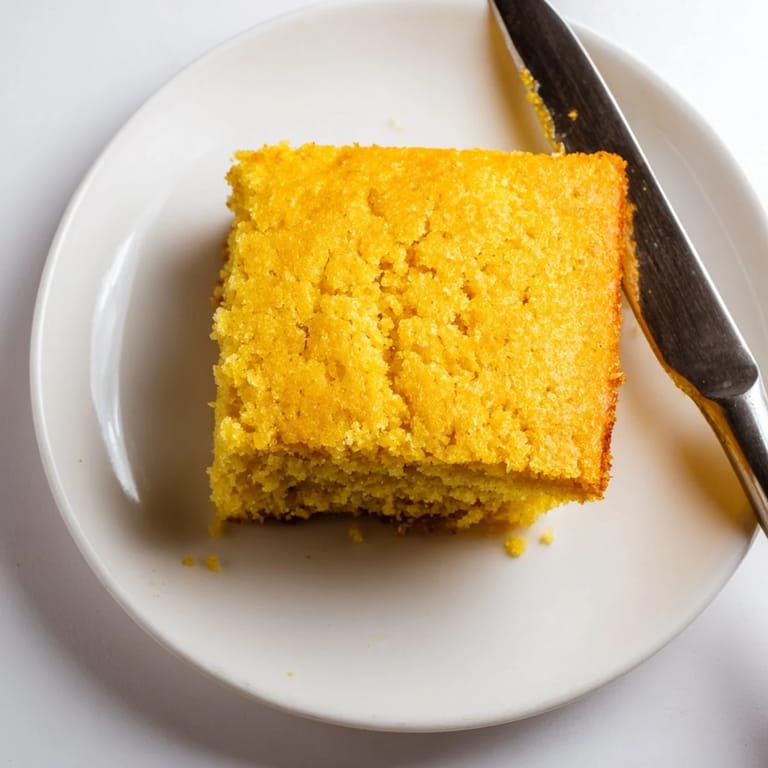
 Pin It
 The smell of cornbread baking takes me straight to my grandmother's tiny kitchen, where she'd pull a cast-iron skillet from the oven with bare hands like it was nothing. I was twelve when I finally asked her why she always made cornbread from scratch instead of using a mix, and she just laughed and said, Because nobody ever wrote a love letter on the back of a box. Now I understand what she meant—there's something about the ritual of whisking cornmeal and honey that makes a kitchen feel like home.
Last winter, during that week where the heater broke and we were all wearing three layers of blankets, I made a double batch of this cornbread for dinner. My roommate sat at the counter watching the oven door like a hawk, and when those edges started turning golden brown, she actually cheered. We ate it warm with melting butter, standing around the stove while snow piled up outside the windows, and suddenly the cold didnt matter so much anymore.
Ingredients
- Yellow cornmeal: This creates that signature texture and golden color—stone-ground gives you the best bite and rustic authenticity
- All-purpose flour: Provides structure so your cornbread holds together without being cakey or dense
- Granulated sugar: Just enough to balance the corn's natural sweetness, though you can adjust this based on your preference
- Baking powder and baking soda: Work together to give you those beautiful pockets and rise without any yeast
- Fine sea salt: Enhances all the flavors and keeps the bread from tasting flat or bland
- Whole milk or buttermilk: Buttermilk adds tang and tenderness, though whole milk still gives you excellent results
- Eggs: Bind everything together while contributing to the rich, moist texture you want
- Unsalted butter: Melted butter adds incomparable flavor, and cooling it prevents scrambling your eggs
- Vegetable oil: Keeps the cornbread moist and helps create that crispy exterior we all love
- Honey: Optional but recommended if you love a sweeter cornbread that pairs perfectly with salted butter
Tired of Takeout? 🥡
Get 10 meals you can make faster than delivery arrives. Seriously.
One email. No spam. Unsubscribe anytime.
Instructions
- Preheat your oven:
- Set it to 400°F and generously grease your square pan or cast-iron skillet with butter—the smell of butter hitting a hot pan is worth it alone.
- Whisk the dry ingredients:
- In a large bowl, combine cornmeal, flour, sugar, baking powder, baking soda, and salt until they're fully incorporated and aerated.
- Mix the wet ingredients:
- In a separate bowl, whisk milk, eggs, melted butter, oil, and honey until the mixture is smooth and completely blended.
- Combine carefully:
- Pour wet ingredients into dry and stir gently with a spatula until just combined—some lumps are fine, and overmixing makes it tough.
- Prepare for baking:
- Pour batter into your prepared pan and smooth the top with a spatula, making sure it's evenly distributed.
- Bake to golden perfection:
- Slide it into the oven for 20–25 minutes until the top is beautifully golden and a toothpick comes out clean.
- Rest before serving:
- Let it cool in the pan for 10 minutes—this patience pays off with cleaner slices and better texture.
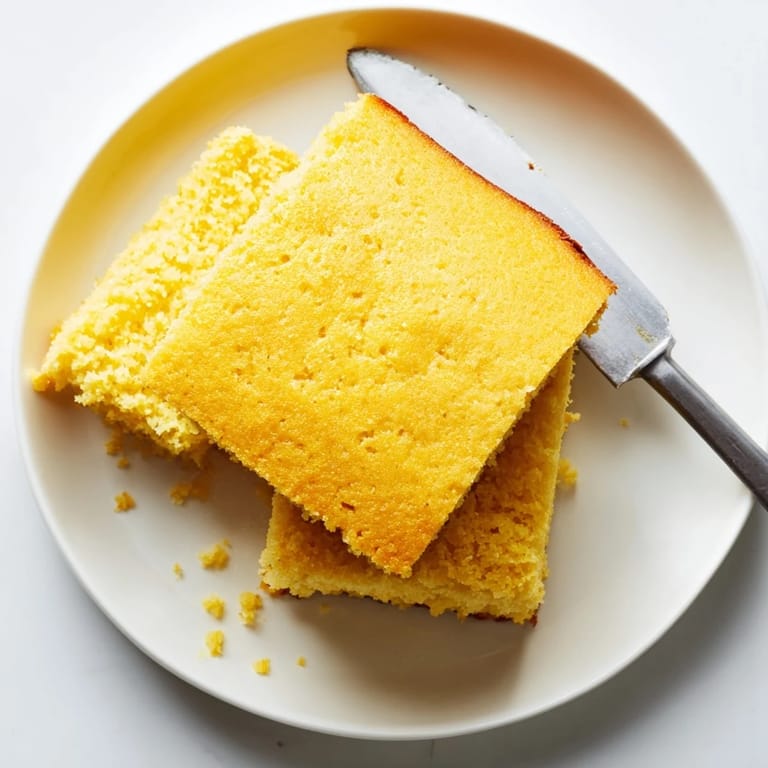 Pin It
 This recipe has become my go-to for potlucks because it disappears within minutes, and people always ask for the recipe. There's something universal about warm cornbread that makes strangers act like old friends gathered around a table, passing butter and sharing stories between bites.
Making It Your Own
Sometimes I fold in sharp cheddar and fresh jalapeños when I want something that stands on its own, especially alongside a simple soup. Other times, I keep it classic and let the honey butter do all the talking.
Cast Iron vs Baking Pan
If you have a cast-iron skillet, use it—its heat retention creates that restaurant-style crust that makes people think you're hiding a secret chef in your pantry. A regular square pan works beautifully too, though the edges will be slightly softer.
Serving Suggestions
Cornbread deserves to be celebrated, not just served as an afterthought. Warm it up slightly before serving, and always have plenty of good butter nearby—salted, whipped, or honey butter all have their place here.
- Crumble it into chili for the last five minutes of cooking
- Toast leftovers for breakfast and top with melted cheese
- Make cornbread stuffing by cubing and drying it overnight
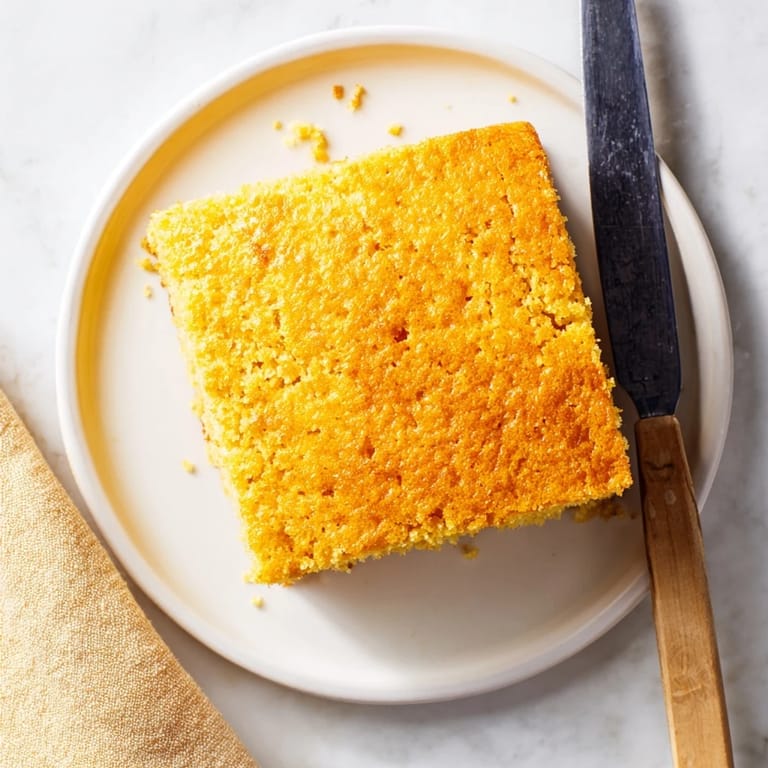 Pin It
 Whether it's a weeknight dinner or a holiday feast, this cornbread has a way of making everything feel a little more special. Pull it from the oven, watch the steam rise, and know that some things in life are simple and good.
Recipe Q&A
- → What makes cornbread have a crispy crust?
The crispy crust forms from baking at high heat (400°F) and the fat content from butter and oil. Using a cast-iron skillet preheated in the oven creates an extra crispy bottom crust, while the butter in the batter promotes golden browning on top.
- → Can I use buttermilk instead of regular milk?
Yes, buttermilk adds tanginess and creates a more tender crumb due to its acidity reacting with the baking powder. If substituting, you may want to reduce the honey slightly as buttermilk provides a more pronounced flavor profile.
- → Why is my cornbread crumbly or dry?
Overmixing the batter can develop gluten, making the texture tough. Dry cornbread usually results from baking too long or using too much cornmeal relative to liquid. Measure ingredients precisely and check for doneness a few minutes early.
- → How should I store leftover cornbread?
Wrap cooled cornbread tightly in plastic wrap or place in an airtight container. It keeps at room temperature for up to 2 days, or refrigerate for up to a week. Reheat slices in the microwave for 15-20 seconds or warm in the oven at 350°F for 10 minutes.
- → What can I add to make savory cornbread variations?
Sharp cheddar cheese, chopped scallions, diced jalapeños, crumbled bacon, or roasted corn kernels add savory depth. For herb versions, try fresh chopped chives, rosemary, or thyme. Reduce sugar to 2 tablespoons when making savory variations.
- → Is cornbread supposed to be sweet or savory?
Traditional American cornbread balances both profiles. Southern-style tends toward savory with minimal sugar, while Northern versions include more sweetener. This recipe falls in the middle, using ¼ cup sugar for a subtle sweetness that enhances rather than overpowers.